
Why was Baseball granted an exemption from Section 1 of the Sherman Act, and why did it last in its entirety so long - until the Curt Flood Act of 1998? On Concurring Opinions, Aaron Zelinsky (who I believe is the first U.S. Supreme Court clerk and Sports Law scholar) has a terrific two-part series (Part 1, Part 2) that addresses the question and also reviews a new book by Stuart Banner on the topic, The Baseball Trust: A History of Baseball's Antitrust Exemption.


Miami Marlins and Free Speech
Leave it to the Marlins to be the team that might actually test my theories on fan expression. Could there be a better example of a ballpark that is publicly funded even if not publicly owned and thus still bound by First Amendment limits?
I am attending tonight's game with a friend; I'll have to keep my eyes open.
Update: I did not see anything at the game--no t-shirts, no signs, no chants. Just an announced crowd of 14,000 (probably a few thousand smaller in reality), the roof actually open on an unusually cool evening, and the Marlins losing again.

Baseball's Antitrust Exemption in the News
 Baseball's antitrust exemption has recently been the focus of two unrelated news stories. First, in the continuing saga of the Oakland Athletics' attempted move to San Jose (see earlier Sports Law Blog posts from 2009 and 2012, respectively, for more background), San Jose Mayor Chuck Reed sent a letter to MLB commissioner Bud Selig on Tuesday requesting a meeting to discuss the A's proposed relocation. In the letter, Reed urged that a meeting could help avoid "additional litigation," an indication that the city may be considering whether to sue MLB to help boost the A's relocation efforts. Indeed, Mayor Reed's request comes on the heels of a threat last month from San Jose Councilman Sam Liccardo, who reportedly discussed "the possibility of San Jose or local businesses challenging baseball's long-standing antitrust exemption in a lawsuit, something he [said] private attorneys would take on at no cost to the city." Liccardo previously made a similar threat back in 2012, however, so it is unclear whether he or the city would actually be willing to follow through with an antitrust suit against MLB. Update (4/11/13): Bud Selig has officially declined Mayor Reed's offer to meet.
Meanwhile, in an unrelated case, a Florida state court judge recently refused to dismiss an antitrust suit filed against the minor leagues in spite of baseball's antitrust exemption. The suit was filed last year by the Jim Evans Academy of Professional Umpiring against the National Association of Professional Baseball Leagues -- the entity officially governing minor league baseball -- and alleges that it unlawfully restrained trade by revoking the Evans Academy's accreditation to train professional umpires, after it established its own umpire training academy (the NAPBL reportedly contends that it revoked the accreditation due to a racist bowling party sponsored by the Evans Academy).
In a decision issued on March 28, Judge Lisa Munyon denied a motion to dismiss filed by the NAPBL, holding that baseball's antitrust exemption did not apply to the case. Judge Munyon primarily based her decision on the 1994 Butterworth v. National League precedent, in which the Supreme Court of Florida held that baseball's antitrust exemption only shielded the reserve clause (the restraint historically used to tie a player to his team for life). The Butterworth court reached its decision by relying on a questionable decision from the Eastern District of Pennsylvania in the 1993 case of Piazza v. Major League Baseball. Although I have previously argued that both the Piazza and Butterworth decisions were wrongly decided, Judge Munyon was nevertheless bound to adhere to the Butterworth opinion in the Evans Academy's case. A trial in the case has tentatively been scheduled for March 31, 2014, although it remains to be seen whether the minor leagues will appeal this most recent decision.
Dark Days for the Scarlet Knights
The Rutgers scandal is as much about this burgeoning field of sports law as it is about anything—but not in a good way. It is about University officials and their lawyers not doing their job well and being caught up in the same critical mistake that seems to scar all the wrong decisions that lead to these scandals in the first place: allowing the money that flows through the leagues, teams and their stars to color what is right and wrong.
The mess began when Mike Rice’s assistant coach Eric Murdock notified University officials of the coach’s abusive behavior by showing them a video of his outrageous conduct. Instead of just firing Rice for treating their students in an unacceptable manner--like they would any other member of the administration—University officials consulted an outside law firm for a recommendation. After all, unlike even the most prestigious member of the faculty, this coach had a five-year $650,000 contract. The lawyers came to campus, interviewed players and coaches, watched the videotape of the practices we all have now seen, and told the President of the University that Rice had not created a hostile work environment for the former assistant coach Murdock. What? That is like cops investigating the scene of a bank robbery and concluding the transaction did not violate IRS rules when the perp received more than $10,000 in cash from the teller.
Of course, Rutgers was just about to enter the lucrative world of big time athletics by joining the Big Ten. A scandal might upset that plan, forcing the Scarlet Knights to remain in the lowly Atlantic Ten.
When the video finally surfaced, and the public outcry began, Rice was immediately sacked—no lawyers had to be consulted—and the athletic director resigned to the tune of a reportedly $1.25 million severance package.
But wait, the latest is that the FBI is getting involved. Surely, now the focus will be on ensuring that the rights and dignity of students at a state institution are not compromised merely because they sign on to play for one of the school’s extremely profitable athletic programs. Actually, according to today’s New York Times, the FBI is also focusing on Murdock and whether his demand to settle his wrongful discharge suit amounted to extortion.
No one seems to have their eye on the ball.

The mess began when Mike Rice’s assistant coach Eric Murdock notified University officials of the coach’s abusive behavior by showing them a video of his outrageous conduct. Instead of just firing Rice for treating their students in an unacceptable manner--like they would any other member of the administration—University officials consulted an outside law firm for a recommendation. After all, unlike even the most prestigious member of the faculty, this coach had a five-year $650,000 contract. The lawyers came to campus, interviewed players and coaches, watched the videotape of the practices we all have now seen, and told the President of the University that Rice had not created a hostile work environment for the former assistant coach Murdock. What? That is like cops investigating the scene of a bank robbery and concluding the transaction did not violate IRS rules when the perp received more than $10,000 in cash from the teller.
Of course, Rutgers was just about to enter the lucrative world of big time athletics by joining the Big Ten. A scandal might upset that plan, forcing the Scarlet Knights to remain in the lowly Atlantic Ten.
When the video finally surfaced, and the public outcry began, Rice was immediately sacked—no lawyers had to be consulted—and the athletic director resigned to the tune of a reportedly $1.25 million severance package.
But wait, the latest is that the FBI is getting involved. Surely, now the focus will be on ensuring that the rights and dignity of students at a state institution are not compromised merely because they sign on to play for one of the school’s extremely profitable athletic programs. Actually, according to today’s New York Times, the FBI is also focusing on Murdock and whether his demand to settle his wrongful discharge suit amounted to extortion.
No one seems to have their eye on the ball.
Private Prison Company Stadium Naming Deal Fails
 |
| Rendering of how GEO Group Stadium would have appeared |
The "surprising[] . . . distractions" to which Zoley refers include (a) student protests challenging FAU to reject the donation as hypocritical pointing out that GEO Group's profit base is derived almost entirely from human misery and suffering, (b) an overwhelmingly passed faculty resolution calling upon President Saunders to cancel the deal because GEO Group's "business practices do not align with the mission of the university," (c) a sit-in held in President Saunder's office by students, (d) a mocking national spotlight from Stephen Colbert's comedy/news show (suggesting that one of the problems of drawing attention to your business, is that people will pay attention to what your business actually does), and (e) community outrage protesting GEO's intimate affiliation with an institution of higher education.
Private prison companies are perversely incentivized to generate profit based on human misery through working to increase the incarceration levels of United States citizens and immigrants. Private prison corporations pay dozens of millions of dollars to lobby legislators for harsher sentencing regimes, new crimes that require incarceration (AZ SB1070), and increasing prevalence of private prison contracts based on dubious claims of efficiency and cost savings. Without providing any product or needed public good, GEO Group, the Corrections Corporation of America (CCA), and other private prison companies profit in two primary ways that are incredibly objectionable:
First, private prison companies contract with state and federal governments to warehouse U.S. prisoners and are paid in taxpayer funds on a "per bed" basis. Essentially, taxpayer funds are being transferred from taxpaying citizens into the pockets of private prison company executives and shareholders for no recognizable good or service. Almost all of the recent emerging evidence suggests that private prison companies run prisons LESS efficiently, LESS safely, and LESS cost effectively than do federal and state governments. The Lake Erie Prison report just released finds that CCA is so profit driven, that the CCA- run prison at Lake Erie does not provide proper supervision of prisoners and that drug use and violence are rampant, both in an attempt to avoid costly prisoner lawsuits.
Second, private prison companies exploit the labor of the prisoners in their care by entering into contracts with companies like IBM, Victoria's Secret, WalMart, and McDonald's for prisoners to work for pennies with the contractual rewards paid into the coffers of the private prison company (thus to shareholders and executives). Prisoners are paid between $0 and $4 for the labor that they engage in sewing for Victoria's Secret, manufacturing for WalMart and McDonalds, with the fruit of their labor being paid to the prison company rather than to the prisoner. Indentured servitude continues in our prisons in the United States and the GEO Group and CCA profit from these immoral activites.
That both of these profit sources continue in the United States today is shocking. That the students, faculty, and community at FAU recognized this appalling business model is heartening. The GEO Group's name will NOT adorn the football stadium at FAU. It appears that "surprising[] . . . distractions" of massive protest are just beginning for the private prison industry.
The Debate Regarding the Exploitation of Student-Athletes Continues
The NCAA's March Madness has, once again, sparked the debate as to the exploitation of college athletes. As the tournament generates millions of dollars and soaring television ratings, people continue to question why those that produce this revenue aren't compensated adequately for their role.
Our own Michael McCann appeared on Bloomberg TV to advocate paying college athletes. You can watch the video clip here. Nice job, again, Mike.
The horrific, and truly tragic, injury to Louisville's Kevin Ware has also riled up student-athlete advocates on the lack of insurance policies--both medical in general and disability in particular once again. For example, did you know that if Ware doesn't have a multi-year scholarship Louisville would be within their legal rights to take his scholarship away if they so choose? [I have no reason to think they will, only that they would have the right to do so.] This article by CBS Sports talks about Ware's situation, and lack of insurance policies.
Fellow student-athlete advocate Marc Isenberg wrote this fine piece entitled "The Student-Athlete Disability Insurance Program isn't What the NCAA Cracks it up to be."
The New York Times is writing a piece on insurance and Ware, for which I along with several others, have been interviewed. We'll get a link to that article up as soon as it's available.
Finally, I've written an Op Ed piece for US News on the topic of paying student-athletes. Here's the link.
NYU Law Sports Law Panel this Wednesday. Free/Open to Public.
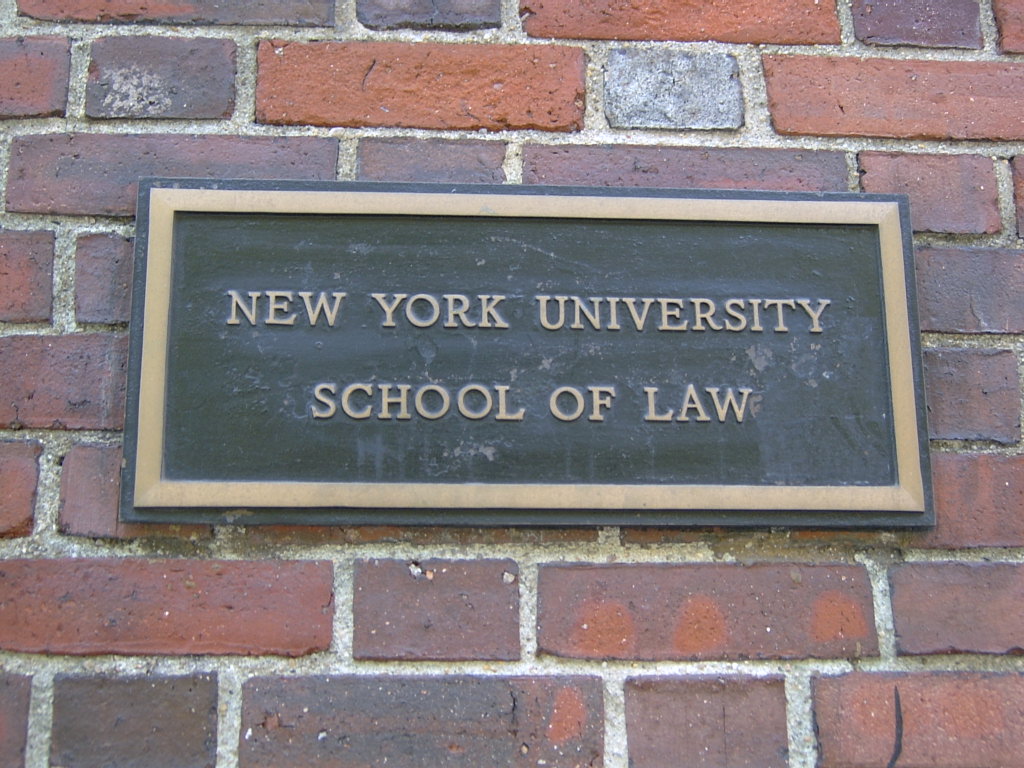 NYU Sports Law Committee's Roundtable Discussion on Labor Relations
Wednesday April 3, 2013, 2:00pm
NYU School of Law, Greenberg Lounge
40 Washington Square South
New York, NY
The Sports Law Committee, in association with the Intellectual Property and Entertainment Law Society at New York University School of Law, cordially invite you to an afternoon of lively discussion on labor relations in sports.
This event, sponsored by Proskauer Rose, is open to the public and free.
Event Schedule:
2:00 p.m. Roundtable Discussion on Labor Relations
Robert Boland, Professor at NYU Tisch Center (moderator)
Russ Granik, former NBA Deputy Commissioner
Charles Grantham, former Executive Director of NBPA
Adam Lupion ‘01, Partner at Proskauer Rose
Allen Shapard, Senior VP, IMG Worldwide, Inc.
Jon Wertheim, Senior Writer for Sports Illustrated
3:15 p.m. Q&A
3:45 p.m. Coffee Break
4:00 p.m. Keynote Address
Michael Weiner, Executive Director of the Major League
Baseball Players Association
4:45 p.m. Q&A
Please contact Committee Chairs Sarah Dyer (SMD471@nyu.edu) and Joeseph Tevelowitz (JLT418@nyu.edu) with any questions.
Subscribe to:
Posts (Atom)